One moment you are driving normally, and the next, a piece of wood, metal, tire tread, or other debris strikes your vehicle, damaging your car or even injuring you. This type of accident happens more often than most drivers realize, especially on highways, construction zones, and busy roads around Arizona.
After a flying debris accident, many drivers are left asking the same question: Who’s responsible? The answers depend on how the debris ended up in the roadway and whether another party acted negligently.
Our team at Shapiro Law Team has created this guide that breaks down what flying debris accidents are and what your legal options are for compensation.
Understanding Flying Debris Accidents
A flying debris accident occurs when an object strikes your vehicle while you are driving. This can lead to shattered windshields, popped tires, and even serious personal injuries.
Common examples of road debris include:
- Items falling from an unsecured truck or trailer.
- Construction materials left on the roadway.
- Tire treads or vehicle parts from other cars.
- Rocks, gravel, or loose materials kicked up by passing vehicles.
In some situations, debris is clearly linked to another driver or company. In others, it appears suddenly, leaving drivers with little time to react. This distinction matters because liability depends heavily on whether the debris was caused by negligence or was unavoidable.
What Happens If Debris Hits Your Car?
If debris hits your car while on the road, the immediate aftermath can be frightening. Even small objects can cause major damage at highway speeds, and larger debris can lead to catastrophic accidents.
In many cases, drivers are forced to make split-second decisions. Swerving to avoid debris can sometimes cause a more serious crash, which raises additional legal and insurance questions.
From a legal standpoint, what matters most is how the debris entered the roadway. If it fell from another vehicle or was left behind due to negligence, someone else may be financially responsible. If the debris was unavoidable and no negligent party can be identified, insurance coverage often becomes the primary option for recovery.
Because these situations are rarely straightforward, documenting what happened is critical. Photos, dashcam footage, witness statements, and police reports can all strengthen your case and help determine fault.
Who Is Liable If Flying Debris Hits Your Car?
Determining liability after flying debris hits your car isn’t always simple. Liability depends on where the debris came from and whether another party failed to act responsibly.
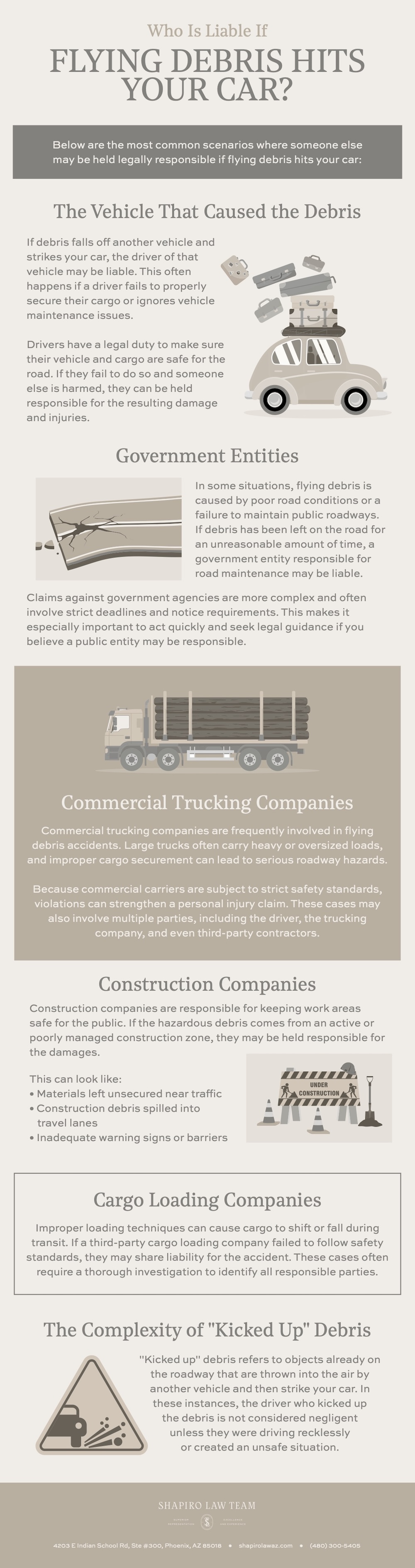
Below are the most common scenarios where someone else may be held legally responsible if flying debris hits your car:
The Vehicle That Caused the Debris
If debris falls off another vehicle and strikes your car, the driver of that vehicle may be liable. This often happens if a driver fails to properly secure their cargo or ignores vehicle maintenance issues.
Drivers have a legal duty to make sure their vehicle and cargo are safe for the road. If they fail to do so and someone else is harmed, they can be held responsible for the resulting damage and injuries.
Government Entities
In some situations, flying debris is caused by poor road conditions or a failure to maintain public roadways. If debris has been left on the road for an unreasonable amount of time, a government entity responsible for road maintenance may be liable.
Claims against government agencies are more complex and often involve strict deadlines and notice requirements. This makes it especially important to act quickly and seek legal guidance if you believe a public entity may be responsible.
Commercial Trucking Companies
Commercial trucking companies are frequently involved in flying debris accidents. Large trucks often carry heavy or oversized loads, and improper cargo securement can lead to serious roadway hazards.
Because commercial carriers are subject to strict safety standards, violations can strengthen a personal injury claim. These cases may also involve multiple parties, including the driver, the trucking company, and even third-party contractors.
Construction Companies
Construction companies are responsible for keeping work areas safe for the public. If the hazardous debris comes from an active or poorly managed construction zone, they may be held responsible for the damages.
This can look like:
- Materials left unsecured near traffic
- Construction debris spilled into travel lanes
- Inadequate warning signs or barriers
Cargo Loading Companies
Improper loading techniques can cause cargo to shift or fall during transit. If a third-party cargo loading company failed to follow safety standards, they may share liability for the accident. These cases often require a thorough investigation to identify all responsible parties.
The Complexity of “Kicked Up” Debris
“Kicked up” debris refers to objects already on the roadway that are thrown into the air by another vehicle and then strike your car. In these instances, the driver who kicked up the debris is not considered negligent unless they were driving recklessly or created an unsafe situation.
Insurance Coverage Options for Flying Debris Damages
In many cases, your comprehensive auto insurance policy is the primary coverage if flying debris hits your car. This type of coverage typically applies to damage caused by objects such as rocks, fallen materials, or debris in the roadway. It may pay for repairs to your windshield, body damage, or other affected areas of your vehicle, subject to your deductible.
If flying debris causes you to swerve and collide with another vehicle or object, your collision coverage may also come into play. This coverage helps pay for damage resulting from a crash, even if no other driver is directly involved.
If another party is clearly responsible, their liability insurance may cover your damages. This often applies in situations involving unsecured cargo, construction debris, or commercial trucking accidents. Proving liability is key in these cases, which is why evidence and legal guidance matter.
As with any vehicle accident, insurance companies may try to push back and reduce your settlement. Our team at Shapiro Law Team knows how to handle insurance companies and get you the results you deserve.
Get Legal Help After a Flying Debris Accident with Shapiro Law Team

If flying debris hit your car and left you dealing with damage, injuries, or unanswered questions, you don’t have to handle all of this alone. At Shapiro Law Team, we understand how overwhelming it can feel when an accident happens through no fault of your own, and we are here to help you pursue the compensation you deserve.
Clients across Arizona trust our team for compassionate guidance and superior representation. We offer free consultations, and you never pay any legal fees unless we win your case.
Let us handle the legal side so you can focus on recovery. Get in touch today to speak with one of our personal injury attorneys.
Frequently Asked Questions
What is a flying debris accident?
A flying debris accident occurs when an object strikes your vehicle while you are driving, without a direct collision between vehicles. These accidents often involve unsecured cargo, construction materials, or road debris kicked up by other vehicles.
What does debris mean in driving?
In driving, debris refers to any foreign object on the roadway that poses a hazard to vehicles. This can include vehicle parts, cargo, construction materials, or other objects like rocks and branches.
Is flying debris on the freeway your fault if it damages your car?
In most cases, flying debris is not automatically your fault. Fault depends on whether another party acted negligently, such as failing to secure cargo or maintain a safe roadway. If no negligent party can be identified, your insurance policy may be the primary option for compensation.